Lionel Messi Family: What His Parents Actually Gave Up

Marta Alizeh

June 3, 2026

Lionel Messi family with his family including wife Antonela Roccuzzo and sons Thiago Mateo and Ciro

Introduction

The night Lionel Messi cried alone in the La Masia dormitory, he was thirteen years old and his mother was 10,000 kilometres away.

His father Jorge had made the move to Barcelona with him. But Celia Cuccittini, the woman whose face Messi would later tattoo on his left shoulder, stayed behind in Rosario, Argentina, with his three siblings. Moving the whole family at once was not financially possible. So the family split across two continents, and a thirteen-year-old boy learned to fall asleep in a foreign country without his mother.

That detail, documented in Guillem Balague’s authorized 2013 biography Messi and referenced in multiple subsequent documentaries, is the most honest entry point into the Lionel Messi family story. It tells you what was actually at stake — not trophies, not Ballon d’Or awards, but a real family in a working-class city reorganizing itself around one child’s football career, and what that cost each of them.

In June 2026, Messi is at his sixth FIFA World Cup — at 39 years old, on North American soil, already the all-time leading scorer in World Cup history with 18 goals. In the stands at every Argentina match, wearing his No. 10 jersey, are his wife Antonela Roccuzzo and their three sons: Thiago, 13; Mateo, 10; Ciro, 8.

This is the story of who built him, what they gave up, and what they got back. Article last substantively updated: June 26, 2026.


Key Takeaways

  • Lionel Messi’s parents are Jorge Messi (steel factory worker and youth football coach at Club Atlético Grandoli) and Celia Cuccittini (part-time cleaner), both from Rosario, Santa Fe, Argentina.
  • Messi’s siblings are older brothers Rodrigo and Matías, and younger sister María Sol — all raised with him on Calle Lavalleja in Rosario.
  • Messi’s wife, Antonela Roccuzzo, has known him since childhood through a mutual Rosario friend. They married on June 30, 2017.
  • Messi’s three sons — Thiago (b. 2012), Mateo (b. 2015), and Ciro (b. 2018) — are enrolled in Inter Miami CF’s MLS Next youth academy in Florida.
  • Messi’s family has Italian and Spanish ancestry through his father’s side, reflecting Rosario’s European immigrant heritage.
  • The family’s move to Barcelona in 2000 was only possible because FC Barcelona agreed to fund Messi’s costly growth hormone treatment — an expense the family could not cover on a factory worker’s wage.

Quick Bio Table

Detail Information
Full Name Luis Lionel Andrés Messi
Date of Birth June 24, 1987
Age 39 (as of June 24, 2026)
Nationality Argentine
Birthplace Rosario, Santa Fe, Argentina
Height 5 ft 7 in (170 cm)
Position Forward / Attacking Midfielder
Current Club Inter Miami CF (Major League Soccer)
Jersey Number 10
2025 MLS Season 29 goals, 19 assists in 28 matches; MLS Golden Boot; MLS Cup winner and MVP
Career Goals 900+ (milestone: March 18, 2026, vs Nashville SC — CONCACAF Champions Cup)
2026 World Cup 5 goals in 2 matches — hat-trick vs Algeria (June 16), brace vs Austria (June 22); 18 goals total (all-time World Cup record)
Father Jorge Horacio Messi
Mother Celia María Cuccittini
Siblings Rodrigo Messi, Matías Messi, María Sol Messi
Wife Antonela Roccuzzo (married June 30, 2017, Rosario)
Children Thiago (b. Nov 2, 2012), Mateo (b. Sep 11, 2015), Ciro (b. Mar 10, 2018)
Ethnicity Argentine of Italian and Spanish descent
Religion Catholic
Youth Clubs Club Atlético Grandoli, Newell’s Old Boys, FC Barcelona La Masia
Article last updated June 26, 2026

Who is Lionel Messi?

Lionel Messi is an Argentine professional footballer born on June 24, 1987, in Rosario, Argentina, and widely considered the greatest player in the history of the sport. Messi has won eight Ballon d’Or awards — more than any other player in history — along with ten La Liga titles, four UEFA Champions League trophies with FC Barcelona, the 2021 Copa América, the 2022 FIFA World Cup with Argentina, and the 2025 MLS Cup with Inter Miami CF. In March 2026, Messi scored his 900th senior career goal against Nashville SC, becoming only the second player in history to reach the milestone, joining Cristiano Ronaldo. At the 2026 FIFA World Cup, he scored a hat-trick against Algeria on June 16 and a brace against Austria on June 22, reaching 18 World Cup goals total — breaking Miroslav Klose’s all-time record and becoming the outright leading scorer in FIFA World Cup history. He turned 39 on June 24, 2026.

Lionel Messi with wife Antonela Roccuzzo and sons Thiago, Mateo and Ciro


Lionel Messi Family Background

Lionel Messi’s family background is rooted in the working-class neighborhoods of Rosario, Argentina’s third-largest city, where Italian and Spanish immigrant heritage runs deep and football has been the dominant shared language for over a century.

Rosario sits on the west bank of the Paraná River in Santa Fe Province. The city received wave after wave of European immigrants in the late 19th and early 20th centuries — predominantly from Italy and Spain — and that heritage runs through families like the Messis to this day. Jorge Messi’s family came from Italian and Spanish stock. When Jorge and Celia married and raised their four children in Rosario, they were continuing a lineage shaped by migration, hard work, and close community.

Messi grew up at Calle Lavalleja, a modest residential street near the Paraná River. Jorge worked at Acindar, a steel manufacturing plant in Rosario, while coaching youth football in his spare time at Club Atlético Grandoli — a local club a short walk from the family home. Celia worked part-time as a cleaner.

Argentina’s football culture was a constant in the household — on television, in conversation, in the streets. The Argentine national football team, clubs like Newell’s Old Boys and Rosario Central, the barrio games on concrete: football was not something the Messi children chose. It was something they absorbed.


Lionel Messi Parents

Jorge Messi: Factory Worker, Youth Coach, and the Man Who Called Barcelona

Lionel Messi’s father, Jorge Horacio Messi, born around 1958 in Rosario, is the central architect of the conditions that made Messi’s career possible. Jorge worked for years at Acindar, a steel manufacturer in Rosario, and simultaneously served as a youth football coach at Club Atlético Grandoli — the neighborhood club where a five-year-old Lionel began playing organized football.

When Lionel was diagnosed around age ten with a growth hormone deficiency — a condition that limits IGF-1 production and restricts physical development — the family learned that nightly hormone injections could help. The cost was several hundred dollars per month, well beyond what a factory worker’s wage could cover. Jorge applied to multiple bodies for support and found none. It was through extended family contacts in Spain that a route to FC Barcelona opened.

According to Balague’s biography, FC Barcelona coach Charly Rexach was so immediately convinced of the boy’s ability that he wrote his commitment to sign Messi on a paper napkin at a restaurant in December 2000 — unwilling to let the moment pass without a record. FC Barcelona agreed to fund the growth hormone treatment in exchange for Messi joining La Masia. Jorge and Lionel moved to Barcelona. Celia and the three other children stayed in Rosario.

Jorge later became deeply involved in managing Messi’s professional affairs. In 2016, he and Lionel faced tax fraud proceedings in Spain, receiving suspended sentences. Despite that difficult chapter, Jorge has been present for every major milestone — on the pitch in Lusail, Qatar, on December 18, 2022 when Argentina won the FIFA World Cup; at Chase Stadium in December 2025 when Inter Miami lifted the MLS Cup; and in the stands in June 2026 as his son broke the all-time World Cup scoring record.

Celia Cuccittini: Emotional Anchor and the Woman on Messi’s Shoulder

Lionel Messi’s mother, Celia María Cuccittini, is the emotional foundation of the Lionel Messi family — and the person permanently memorialized on his left shoulder.

Celia worked as a part-time cleaner and raised four children in Rosario. When Jorge and Lionel moved to Barcelona in 2000, Celia stayed behind with Rodrigo, Matías, and María Sol. The family calculated it was the only financially viable option. It was, by every account, deeply painful.

Messi spoke about his homesickness at La Masia in a 2018 interview with the Spanish outlet Marca, describing missing his family as the hardest personal challenge of his football career. Balague’s biography documented that Messi phoned Celia every night from Barcelona, often in tears, and that her voice was the thing that most consistently steadied him.

The tattoo of Celia’s face on Messi’s left shoulder — inked in 2011 — has become one of the most recognized images in world sport. His quietness, his refusal to court drama, his deep pull toward Rosario: these values came from the household she built, not from any football academy.


Does Lionel Messi Have Siblings?

Yes. Lionel Messi has three siblings — two older brothers and one younger sister — all raised alongside him in Rosario, Argentina.

Rodrigo Messi is the eldest sibling. As children, Rodrigo and Lionel played street football constantly near Calle Lavalleja. Those games — against older, bigger opponents, without rules or referees — formed the competitive instincts professional scouts would later describe as unusually refined. In adulthood, Rodrigo has worked in a professional capacity connected to Messi’s scheduling and career management.

Matías Messi is the second-oldest sibling. Matías has been connected to the Fundación Leo Messi, which works with children in need of healthcare and education access in Argentina, and handles logistical matters in Rosario on the family’s behalf.

María Sol Messi, the youngest sibling and only sister, holds a senior role at The Messi Store, the family’s official retail brand. She is the most publicly visible of the three siblings on social media, with over 400,000 Instagram followers.

Messi told Marca in 2018: “I love football and I live for it, but family is above all.” The four siblings still reunite in Rosario every Christmas — a tradition maintained through his Barcelona, Paris, and Miami years.


Lionel Messi Wife and Children

Antonela Roccuzzo: Childhood Friend, Life Partner, Global Figure

Lionel Messi’s wife, Antonela Roccuzzo, has known him longer than any football club has. Born on February 26, 1988, in Rosario, Antonela was connected to Messi through a mutual childhood friend and grew up in the same city. Their friendship predated his professional career by years and evolved into romance while Messi was already at FC Barcelona.

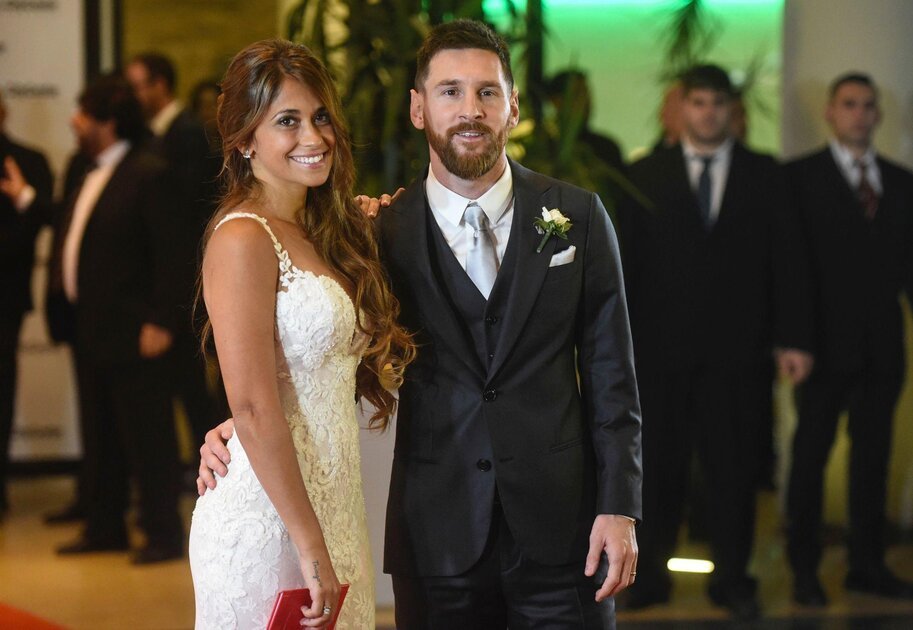
They married on June 30, 2017, in Rosario — in the same city where they both grew up. The wedding was attended by Neymar Jr, Luis Suárez, Cesc Fàbregas, and Sergio Agüero, among others. Antonela studied dentistry before building an independent career as a model, influencer, UNICEF ambassador, and Special Olympics ambassador. She has approximately 40 million Instagram followers.

Since the family’s move to Miami in July 2023, Antonela has been a constant presence at Inter Miami CF matches. In June 2026, she shared images of herself and all three sons at Argentina’s World Cup matches in their No. 10 jerseys — images that circulated to tens of millions globally.

Thiago Messi: The Eldest Son

Thiago Messi was born on November 2, 2012, in Barcelona, Spain, and holds Argentine and Spanish nationality. Messi announced his birth via a photo of two small football boots marked “T” and “M.” Thiago joined the FC Barcelona youth academy, briefly attended the PSG academy, and after the 2023 move to Miami enrolled in Inter Miami CF’s MLS Next U14 academy — the same organization as his father. Messi has described him as the calm one of his sons, with interests in cars and motorcycles alongside football.

Mateo Messi: The Fire in the Family

Mateo Messi was born on September 11, 2015. Messi told TyC Sports: “Mateo is a terror, a character. It’s nice to see how different they are from each other.” In 2025, footage of Mateo scoring for Inter Miami’s youth team while Lionel watched from the sideline became one of the year’s most-shared football clips. Mateo wears the No. 10 jersey — his father’s number.

Ciro Messi: The Youngest

Ciro Messi was born on March 10, 2018. After Ciro’s birth, Messi told Sports Illustrated: “I’m ecstatic about the family we have been able to create.” Ciro’s name and birthdate are tattooed on Messi’s right calf alongside the initials T and M for his older brothers. Antonela also has Ciro’s name inked on her arm. All three sons are enrolled in Inter Miami CF’s youth academy in Fort Lauderdale, Florida.


Lionel Messi Family Timeline

Year Event
1987 Lionel Messi born June 24 in Rosario — third child of Jorge and Celia
1992 Begins at Club Atlético Grandoli, coached by father Jorge
1995 Joins youth academy at Newell’s Old Boys, Rosario
1997 Diagnosed with growth hormone deficiency; treatment beyond family’s financial means
2000 FC Barcelona trial arranged; Charly Rexach signs commitment on a napkin (December); Jorge and Lionel move to Barcelona, Celia stays in Rosario
2004 First-team debut for FC Barcelona, October 16, aged 17
2011 Tattoo of Celia Cuccittini’s face inked on left shoulder; relationship with Antonela confirmed publicly
2012 Thiago Messi born November 2, Barcelona
2015 Mateo Messi born September 11
2017 Marries Antonela Roccuzzo, June 30, Rosario
2018 Ciro Messi born March 10
2021 Argentina win Copa América — Messi’s first senior international trophy
2022 Argentina win FIFA World Cup, December 18, Lusail, Qatar; Jorge celebrates on the pitch
2023 Family relocates to Miami; Messi joins Inter Miami CF in July
2025 Inter Miami win MLS Cup, December 6; Messi named MLS Cup MVP; entire family on the pitch
Mar 2026 900th career goal scored vs Nashville SC at Geodis Park, Tennessee
Jun 2026 Hat-trick vs Algeria (June 16) and brace vs Austria (June 22) bring World Cup total to 18 — all-time record

Childhood and Early Life

Lionel Messi was born on June 24, 1987, in Rosario, Santa Fe Province, Argentina, the third of four children raised by Jorge and Celia Messi. From age five, he trained at Club Atlético Grandoli where his father coached. His late maternal grandmother, also named Celia, attended those early sessions. She died when Messi was eleven. His habit of pointing to the sky after scoring is a tribute to her memory — a practice confirmed in a 2013 interview with La Nacion Argentina.

At age eight, Messi joined Newell’s Old Boys, the storied Rosario club that has produced Argentine internationals across generations. He trained there until his growth hormone deficiency diagnosis changed the family’s trajectory. The condition limits the body’s IGF-1 production, affecting physical development. Nightly injection treatment could counteract it, but the cost was well beyond what Jorge’s wages at Acindar could cover. Multiple support applications found no funding.

Messi arrived at FC Barcelona’s La Masia academy in 2001. He was thirteen, in a foreign country, without his mother, under pressure to justify the club’s medical investment. Balague’s biography documented that Messi came close to returning to Argentina in those early years, and that the eventual arrival of Celia and his siblings in Barcelona helped him stabilize. Messi made his first-team debut for FC Barcelona on October 16, 2004, aged 17.


Family Influence on Career

No career in professional football has been shaped as publicly and verifiably by family as Lionel Messi’s.

Jorge Messi did not simply encourage his son. He restructured his life, moved continents, navigated club contracts, managed professional relationships, and stayed beside Messi through legal proceedings. He was the decision-maker who turned a diagnosis into an opportunity instead of an end.

Celia Cuccittini’s influence is less institutional but more personal. The values Messi carries — his avoidance of drama, his loyalty to old friends, his stubborn attachment to Rosario — are not things football academies teach. They come from the household she built. The emotional cost of her separation from Lionel during his La Masia years, and the fact that Messi never let it harden him, says something about both of them.

His siblings gave him the competitive baseline before any coach did. Rosario’s barrio football — against older, bigger opponents, on concrete, without referees — built instincts that analysts would later call natural. They were not natural. They were learned, against Rodrigo and Matías and their friends, in conditions that never allowed a small boy to be comfortable.

Antonela Roccuzzo provided the consistent personal stability that two decades of global scrutiny could easily have eroded. She moved with him from Barcelona to Paris to Miami, raised three children through the most scrutinized football career in history, and built her own identity alongside it. Messi told reporters at the 2022 World Cup in Qatar: “From the very beginning, from kick-off to the final whistle, I’m thinking of my children. They’re growing older. They understand better what’s going on and they enjoy it more.” At the 2026 World Cup, all three sons understand exactly what they’re watching.


Lionel Messi in 2025 and 2026: MLS Cup, 900 Goals, World Cup Record

The 2025 MLS season was the most dominant of Messi’s time in American football. He scored 29 goals and registered 19 assists in 28 appearances, winning the MLS Golden Boot. Inter Miami defeated the Vancouver Whitecaps 3-1 in the 2025 MLS Cup Final on December 6, 2025. Messi contributed two assists and was named MLS Cup MVP. Antonela and all three sons joined him on the pitch afterward — Inter Miami’s first-ever league championship.

On March 18, 2026, Messi scored his 900th senior career goal in the seventh minute of Inter Miami’s CONCACAF Champions Cup match against Nashville SC at Geodis Park in Tennessee. He became only the second player in history to reach 900 goals, joining Cristiano Ronaldo.

At the 2026 FIFA World Cup, against Algeria on June 16, Messi scored a hat-trick in a 3-0 win — reaching 16 World Cup goals to equal Klose’s record and becoming the oldest hat-trick scorer in men’s World Cup history at 38 years and 357 days. Against Austria on June 22, he scored twice in a 2-0 win, taking his total to 18 World Cup goals and breaking Klose’s record outright. Per ESPN’s official 2026 World Cup statistics, Messi became only the third player to score in six consecutive World Cup matches, joining Just Fontaine (France, 1958) and Jairzinho (Brazil, 1970). Antonela and all three sons, in No. 10 jerseys, attended both matches.


Notable Facts About the Lionel Messi Family

  • Messi’s late maternal grandmother was also named Celia. She attended his earliest sessions at Club Atlético Grandoli before she died when Messi was eleven. His post-goal tribute of pointing to the sky is dedicated to her memory, as confirmed in a 2013 La Nacion Argentina interview.
  • Messi has a tattoo of his mother Celia’s face on his left shoulder, inked in 2011 — visible in thousands of photographs of him celebrating goals across three continents.
  • Jorge Messi was a steel factory worker at Acindar AND a youth football coach at Club Atlético Grandoli — the club where Lionel first played organized football at age five.
  • Celia stayed in Rosario with the other three children when Jorge and Lionel moved to Barcelona. Balague’s biography documented that Messi phoned her every night from La Masia, often in tears.
  • Antonela Roccuzzo met Messi through a mutual childhood friend in Rosario. Their friendship predated his professional career by years before becoming romantic.
  • Thiago Messi’s birth was announced via a photo of two small football boots marked “T” and “M” — one of the earliest examples of a footballer using social media to announce a child’s birth.
  • Mateo Messi wears the No. 10 jersey in Inter Miami’s youth academy — the same number his father made iconic.
  • Ciro Messi’s name and birthdate are tattooed on Messi’s right calf alongside the initials T and M for his older brothers. Antonela also has Ciro’s name inked on her arm.
  • Antonela Roccuzzo holds active ambassador roles for UNICEF and the Special Olympics and has approximately 40 million Instagram followers.
  • María Sol Messi holds a senior role at The Messi Store and has over 400,000 Instagram followers — the most publicly visible of Messi’s three siblings.
  • All three of Messi’s sons are enrolled in Inter Miami CF’s MLS Next youth academy in Fort Lauderdale, Florida — the same organization where their father plays for the first team.
  • The Messi family reunites in Rosario for Christmas every year — maintained through his Barcelona, Paris, and Miami years without interruption.

Related Reads From TheCelebrityFamily


External References


FAQ

Who are Lionel Messi’s parents?
Lionel Messi’s parents are Jorge Horacio Messi and Celia María Cuccittini, both from Rosario, Santa Fe, Argentina. Jorge worked as a steelworker at Acindar and coached youth football at Club Atlético Grandoli. Celia was a part-time cleaner. Jorge arranged Messi’s FC Barcelona trial in 2000, which led to the club funding his growth hormone treatment in exchange for Messi joining La Masia.

Does Lionel Messi have siblings?
Yes. Messi has three siblings: older brothers Rodrigo and Matías, and younger sister María Sol. All four grew up together in Rosario. Rodrigo and Matías work in professional roles connected to Messi’s career and the Fundación Leo Messi. María Sol holds a senior role at The Messi Store and has over 400,000 Instagram followers.

Who is Lionel Messi’s wife?
Lionel Messi’s wife is Antonela Roccuzzo, born February 26, 1988, in Rosario, Argentina. She has known Messi since childhood through a mutual friend. They married on June 30, 2017, in Rosario. Antonela is a model, UNICEF ambassador, and Special Olympics ambassador with approximately 40 million Instagram followers.

How many children does Lionel Messi have?
Lionel Messi has three sons with Antonela Roccuzzo: Thiago (born November 2, 2012), Mateo (born September 11, 2015), and Ciro (born March 10, 2018). All three are enrolled in Inter Miami CF’s MLS Next youth academy in Fort Lauderdale, Florida.

What is Lionel Messi’s family background and ethnicity?
Messi’s family background is Argentine, with Italian and Spanish ancestry through his father Jorge’s side — reflecting the European immigration history of Rosario, Santa Fe Province. He is Catholic and grew up in a working-class household as the third of four children.

Where was Lionel Messi born and raised?
Lionel Messi was born on June 24, 1987, in Rosario, Santa Fe Province, Argentina. He grew up on Calle Lavalleja, trained at Club Atlético Grandoli and Newell’s Old Boys, and moved to Barcelona at thirteen. He has been based in Miami, Florida since joining Inter Miami CF in July 2023.

Why is Lionel Messi famous?
Messi is widely considered the greatest footballer in history. He has won eight Ballon d’Or awards, ten La Liga titles, four UEFA Champions League titles, the 2021 Copa América, the 2022 FIFA World Cup, and the 2025 MLS Cup. At the 2026 World Cup, he became the all-time leading scorer in FIFA World Cup history with 18 goals.

Who was Messi’s grandmother and why does he point to the sky?
Messi’s maternal grandmother was also named Celia. She attended his earliest football sessions at Club Atlético Grandoli before dying when Messi was eleven. In a 2013 interview with La Nacion Argentina, Messi confirmed that his post-goal tribute of pointing to the sky is dedicated to her memory.

What youth clubs did Messi play for before FC Barcelona?
Before FC Barcelona’s La Masia, Messi played at Club Atlético Grandoli in Rosario from age five, coached by his father Jorge. At age eight, he joined the youth system of Newell’s Old Boys, where he trained until moving to Barcelona at age thirteen in 2000.

What records did Messi break at the 2026 FIFA World Cup?
At the 2026 World Cup, Messi scored a hat-trick against Algeria (June 16), equalling Klose’s record and becoming the oldest hat-trick scorer in men’s World Cup history (38 years, 357 days). Two goals against Austria (June 22) took his total to 18 World Cup goals — breaking Klose’s record outright. He also became only the third player to score in six consecutive World Cup matches, joining Just Fontaine (France, 1958) and Jairzinho (Brazil, 1970).


Conclusion

The story of the Lionel Messi family is not a story about natural talent that simply found its way to the top. It is a story about what a working-class family in Rosario chose to sacrifice, and how clearly each of them understood what that sacrifice would cost.

A factory worker who made one right phone call and moved continents. A mother who stayed behind so her son could go forward, whose face is now permanently visible on his shoulder in front of billions. Two brothers who gave him the competitive edge before any academy did. A sister building her own career within the family story. A childhood friend who grew into a life partner and traveled to every city his career demanded. Three boys born into a legacy who are now old enough to understand what they’re inside of.

Eight Ballon d’Or awards. A 2022 World Cup. An MLS Cup. Nine hundred career goals. Eighteen World Cup goals — more than any player in the history of the tournament. And in June 2026, as Messi plays the final chapter of the most celebrated football career in history, his family is still there. Same as always. Wearing the No. 10. In the stands.

This article reflects information as of June 26, 2026, and will be substantively updated — not just date-stamped — as new verified information about the Lionel Messi family emerges.

Leave a Comment