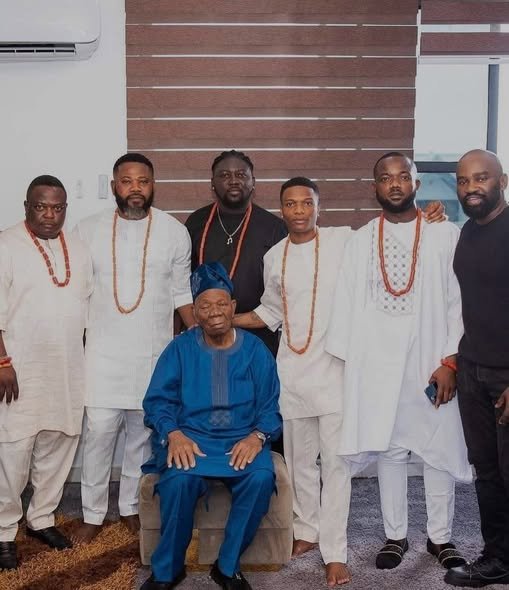
The church choir in Ojuelegba, Lagos, is where Ayodeji Balogun first sang in public. His mother, Jane Dolapo Balogun, put him there. She handed him instruments, encouraged the gift, and watched it outgrow the church walls and then the country. The Wizkid family story cannot be properly told without starting in that Lagos neighborhood, in a home shaped by two faiths, three wives, and one woman who saw a musician in her son before anyone else did.
Wizkid became the artist who took Afrobeats to the Billboard Hot 100 and three sold-out nights at the O2 Arena. Jane Balogun did n’t live to see all of it. But the foundation she laid at age 11 in a Surulere church choir made everything that followed possible.
Quick Biography
| Full Name | Ayodeji Ibrahim Balogun |
|---|---|
| Date of Birth | July 16, 1990 |
| Age | 35 |
| Nationality | Nigerian |
| Birthplace | Ojuelegba, Surulere, Lagos, Nigeria |
| Role | Singer, songwriter |
| Label / Affiliation | Starboy Entertainment |
| Parents | Alhaji Muniru Olatunji Balogun (father), Jane Dolapo Balogun (mother, d. August 18, 2023) |
| Siblings | Lade Balogun (younger sister), Yetunde Balogun (sister), others from father’s marriages |
| Ethnicity | Yoruba |
| Religion | Christian (raised) |
| Article last substantively updated | June 30, 2026 |
Who is Wizkid?
Wizkid, born Ayodeji Ibrahim Balogun on July 16, 1990, in Lagos, Nigeria, is a Nigerian singer and songwriter widely credited with helping bring Afrobeats to a global mainstream audience. He won the Grammy Award for Best Music Video in 2021 as a featured artist on “Brown Skin Girl” with Beyoncé and became the first African artist to sell out London’s O2 Arena three consecutive nights. He is among the most decorated African musicians of his generation, with a career that spans over two decades and multiple global chart entries.
Wizkid Family Background
The Wizkid family is rooted in Ojuelegba, a dense, culturally significant neighbourhood in the Surulere district of Lagos, Nigeria. Wizkid’s mother, Jane Dolapo Balogun, came from the Shitta-Bey family in Surulere, one of Lagos’s historic families with long local roots. That connection to place is important: Ojuelegba appears by name in Wizkid’s 2014 song of the same name, a direct tribute to the neighbourhood’s specific texture in his life.

His father, Alhaji Muniru Olatunji Balogun, is a Muslim who married three wives. Wizkid’s mother Jane was a Christian. The household Wizkid grew up in was therefore both interfaith and polygamous. That combination shaped his early environment in practical ways: a large family across different religious lines, competing traditions in the same house, and, in Jane Balogun’s case, a mother who used her Christian faith to direct her son toward music.
The interfaith structure of the Wizkid family is often mentioned but rarely examined. Growing up between Islam and Christianity in Lagos, in a family where his father’s world was shaped by one tradition and his mother’s by another, gave Wizkid exposure to two of Nigeria’s most powerful cultural currents from the start. His mother’s faith pointed him toward a local church, and the church pointed him toward a choir, and the choir pointed him toward everything that followed.

Wizkid’s Parents
Wizkid’s father, Alhaji Muniru Olatunji Balogun, was initially opposed to his son’s decision to pursue music professionally. When Wizkid began pulling away from formal education to focus on his career, Muniru was reportedly unhappy with the direction. That position shifted after Wizkid’s success became too large to argue with. Muniru Balogun went from opposing his son’s path to becoming proud of it, a trajectory many Nigerian parents have followed once the commercial reality of their child’s music career became clear.
Wizkid’s mother, Jane Dolapo Balogun, took a very different approach from the beginning. She encouraged his participation in the choir at a local church in Surulere. She gave him musical instruments. She was, by his own account and by consistent reporting, the parent who believed in the music before the music had any evidence of earning belief.
Wizkid has described his mother’s death as the deepest pain of his life. Jane Dolapo Balogun died on August 18, 2023, in London. After her passing, he spoke publicly about grief in interviews, saying that life had started to feel “meaningless” in the months that followed. He has returned to the subject of her death repeatedly in conversation, a pattern that reflects how central she was not just to his childhood but to his identity as an adult.
Jane Balogun had four children, including Wizkid. She was reported to have been a warm and active presence in his professional life up until her death.
Does Wizkid Have Siblings?
Wizkid grew up in a large family structure, the result of his father’s three marriages. From his mother Jane, his known siblings include Lade Balogun, his younger sister, and Yetunde Balogun, a sister who is reported to be living in the United States. A source also names Omolara Osunkoya and Olubusayo Balogun among Jane Balogun’s children, giving Wizkid a total of three siblings from his mother’s side.
His father’s other two marriages expanded the household considerably. The full number of half-siblings from his father’s other wives has not been confirmed in specific detail across public sources, and Wizkid has not spoken precisely about this. What is consistently reported is that he grew up in a large, lively extended family rather than a small nuclear household.
That environment, crowded and interfaith and connected across multiple households, is part of what makes the church choir detail so significant. Jane Balogun gave her son a structured creative outlet in a home that had plenty of noise but no obvious musical tradition to inherit.
Childhood and Early Life
Wizkid grew up in Ojuelegba, Surulere, Lagos. The area has a particular place in Lagos cultural history: it sits close to where Fela Kuti held his famous Shrine performances, and the neighbourhood’s dense street life has shaped the identity of numerous Nigerian artists. Wizkid’s relationship to Ojuelegba is personal, not just geographic. His 2014 song “Ojuelegba” is one of the most direct artistic tributes to a childhood neighbourhood in Nigerian music.
He began recording music at 11 years old. His first formal project was a collaborative album with the Glorious Five, a group he formed with friends from his church. That church connection was his mother’s doing. She had placed him in the choir, and the choir became his first performance experience and his first creative community.
At 16, he left Lagos to attend Ogun State University. He returned to Lagos and in 2009 signed to Empire Mates Entertainment, the label run by Banky W. His debut album Superstar came out in 2011 and established him as one of the most exciting young voices in Nigerian music. From that point, the trajectory moved upward quickly.
His feature on Drake’s “One Dance” in 2016, alongside Kyla, hit number one on the Billboard Hot 100 and held the position for ten consecutive weeks. That moment moved Wizkid from African superstar to genuinely global figure.
Family Influence on Wizkid’s Career
Jane Dolapo Balogun’s influence on Wizkid’s career is foundational in the literal sense. She introduced him to the choir at a formative age, and the choir gave him pitch training, performance experience, and the feeling of singing for and with a group. Those instincts pre-dated any studio work. They were built in a church in Surulere, at 11 years old, because his mother decided that was where he should be.
His father’s eventual pride matters too, in a different way. Muniru Balogun’s initial resistance was real, and it gave Wizkid a specific kind of pressure to succeed. The path he chose had a cost in family tension at the start. When his father’s position changed, it validated a choice Wizkid had made against the grain of family expectations. That arc, choosing the music over the academic path and being right, shapes how Wizkid has always talked about his own career.
The grief of his mother’s death in 2023 appears in his music and his public statements in ways that suggest it has reshaped his relationship to what the career means. He has described a period of feeling lost after she died. Artists who have lost a defining parental relationship often describe their subsequent work as being in conversation with that absence. In Wizkid’s case, that dimension is now a permanent part of his story.
Wizkid’s four sons add another generational layer to the Wizkid family. Boluwatife Balogun, known as Tife, was born in 2011 with Sola Ogudugu. Ayodeji Jr was born in 2016 with Binta Diamond Diallo. Zion Ayo and a fourth son were born in 2017 and 2022 respectively, both with Jada Pollock. Wizkid has spoken about fatherhood as a source of motivation in his career.
For other Nigerian Afrobeats artists whose family backgrounds shaped their musical identity, see Rema’s family story, which traces the personal losses that give his music its emotional directness, and Ayra Starr’s family background, reflecting the upbringing of one of the artists who emerged from the scene Wizkid helped build.
Interesting Facts About Wizkid’s Family
- Wizkid’s parents came from different faiths. His father Muniru is Muslim. His mother Jane was Christian. He grew up attending church, where his mother placed him in the choir.
- Jane Dolapo Balogun came from the Shitta-Bey family of Surulere, Lagos, one of the neighbourhood’s historic families.
- Wizkid formed his first musical group, the Glorious Five, with friends from his church at age 11. His mother’s encouragement made that happen.
- Jane Balogun died on August 18, 2023, in London. Wizkid has publicly described her death as the deepest pain of his life.
- Wizkid’s father Muniru initially opposed the music career. He reversed that position as Wizkid’s success grew.
- Wizkid has four sons: Boluwatife (born 2011), Ayodeji Jr (born 2016), Zion Ayo (born 2017), and a fourth son (born 2022).
- His 2014 song “Ojuelegba” is a direct tribute to the Lagos neighbourhood where he grew up with his family, and it remains one of the most celebrated place-based songs in Afrobeats.
- Wizkid became the first African artist to sell out London’s O2 Arena three consecutive nights, a record built on the foundation his mother laid in a Surulere church choir.
Featured Snippet Answers
Who are Wizkid’s parents? Wizkid’s parents are Alhaji Muniru Olatunji Balogun, a Muslim from Lagos who married three wives, and Jane Dolapo Balogun, a Christian from the Shitta-Bey family of Surulere who actively encouraged her son’s music from childhood. Jane Balogun died on August 18, 2023, in London. Wizkid has called her death the deepest pain of his life.
Does Wizkid have siblings? Wizkid’s siblings from his mother Jane include Lade Balogun, his younger sister, and Yetunde Balogun, a sister reported to be living in the United States. His father’s three marriages produced additional half-siblings, though the total number has not been publicly confirmed in specific detail.
What is Wizkid’s family background? Wizkid comes from an interfaith, polygamous household in the Surulere district of Lagos, Nigeria. His father is Muslim and married three wives. His mother was Christian and enrolled Wizkid in a church choir at age 11, where he formed his first musical group. His mother’s family, the Shitta-Beys, are a historic Surulere family.

Where is Wizkid from? Wizkid is from Ojuelegba, in the Surulere district of Lagos, Nigeria. He is Yoruba Nigerian and grew up in Lagos before gaining national and then international recognition. His 2014 song “Ojuelegba” is a tribute to the specific neighbourhood where his family is rooted.

People Also Ask
Who is Wizkid?
Wizkid is a Nigerian singer and songwriter, born Ayodeji Ibrahim Balogun on July 16, 1990, in Lagos. He is one of the defining artists of the global Afrobeats movement and a Grammy winner, credited with helping bring Afrobeats to mainstream global audiences.
Who are Wizkid’s parents?
Wizkid’s father is Alhaji Muniru Olatunji Balogun, a Muslim who had three wives. His mother was Jane Dolapo Balogun, a Christian from Surulere, Lagos, who placed Wizkid in a church choir at age 11 and encouraged his music throughout his early life. Jane died on August 18, 2023, in London.
Does Wizkid have siblings?
Yes. From his mother, Wizkid has at least three siblings: Lade Balogun, Yetunde Balogun, and others. His father’s three marriages expanded the family considerably, though a precise sibling count from his father’s other marriages has not been publicly confirmed.
What is Wizkid’s nationality?
Wizkid is Nigerian. He was born in Lagos and holds Nigerian citizenship. He is of Yoruba ethnicity.
Where was Wizkid born?
Wizkid was born in Ojuelegba, Surulere, Lagos, Nigeria, on July 16, 1990.
Why is Wizkid famous?
Wizkid is famous for his role in bringing Afrobeats to global audiences. His 2016 feature on Drake’s “One Dance” held number one on the Billboard Hot 100 for ten weeks. He won a Grammy Award for Best Music Video in 2021 for “Brown Skin Girl” with Beyoncé and became the first African artist to sell out London’s O2 Arena three nights in a row.
Frequently Asked Questions
What is Wizkid’s real name?
Wizkid’s real name is Ayodeji Ibrahim Balogun. He was born on July 16, 1990, in Lagos, Nigeria.
What happened to Wizkid’s mother?
Wizkid’s mother, Jane Dolapo Balogun, died on August 18, 2023, in London. Wizkid described the loss publicly as “the deepest pain I’ve ever felt” and spoke about feeling lost in the months that followed.
How many children does Wizkid have?
Wizkid has four sons. Boluwatife Balogun (born 2011, with Sola Ogudugu), Ayodeji Jr (born 2016, with Binta Diamond Diallo), Zion Ayo (born 2017, with Jada Pollock), and a fourth son (born 2022, also with Jada Pollock).
What does “Ojuelegba” mean to Wizkid?
Ojuelegba is the Lagos neighbourhood where Wizkid grew up. He released a song called “Ojuelegba” in 2014 as a direct tribute to the area and the community that shaped his early life. It remains one of the most celebrated place-based songs in Afrobeats.
Did Wizkid win a Grammy?
Yes. Wizkid won the Grammy Award for Best Music Video in 2021 as a featured artist on “Brown Skin Girl” alongside Beyoncé, Blue Ivy Carter, and SAINt JHN.
What religion is Wizkid?
Wizkid was raised Christian by his mother Jane, who enrolled him in a church choir at age 11. His father Muniru Balogun is Muslim. Wizkid has not made detailed public statements about his current religious practice.
Where is the Wizkid family from?
The Wizkid family is from Lagos, Nigeria. His mother’s family, the Shitta-Beys, are from Surulere. He is of Yoruba ethnicity.
Conclusion
Wizkid’s music has always carried the weight of where he came from. The church choir in Ojuelegba, his mother’s quiet insistence on singing, the dense and complicated life of a polygamous household in Surulere, all of it formed both the sound and the emotional register he brings to his work.
Jane Dolapo Balogun didn’t live to see everything her son became. But the Grammy, the O2 Arena, the Billboard Hot 100, those were built on a foundation she laid in a Lagos church when Wizkid was 11 years old. She gave him the first audience. She gave him the first instrument. She gave him the instinct that everything else grew from.
That’s the story behind the Wizkid family, and it’s the story most worth telling.
This article reflects information available as of June 30, 2026, and will be updated substantively, not just date-stamped, as verified new information about the Wizkid family emerges.